What is Corsica?
Corsica is an island located in the Mediterranean Sea, 105 miles south of France, 56 miles from Italy, and 7 miles from Sardinia(island owned by Italy). It has a population of around 350 thousand individuals and is predominantly roman-catholic.

A Brief History
Corsica has a very diverse past. First being inhabited by the Corsi(an ancient group of people), then taken by the Greeks, then the Italians, then being swapped between the French and the Italian until the modern day French occupation. The island has certainly been hurt by its colonial past. Not only because it has been historically exploited for resources by both Italy and France which has slowed its economic development(has not stopped it entirely), but it has also led to fading of its original language(Corsu), which to this day France still insists on making a reality. Certain laws have been implemented to supress it, an example of this would be the Ferry Laws of 1882. These mandated that all Corsicans be educated in French. The fading of the language only got worse after WWII. Before the war 85% of Corsicans knew Corsu, afterwards, only 30%. However, despite taking this dip, there have been many attempts to revive the language even in the French government. The Deixonne Law of 1951 for instance, allowed the Corsican language to be taught in schools, starting a major turning point for the language as a whole. Since then, protests in the 1970s/1980s followed by current movements today have given a new life to Corsu despite efforts to to eradicate it.
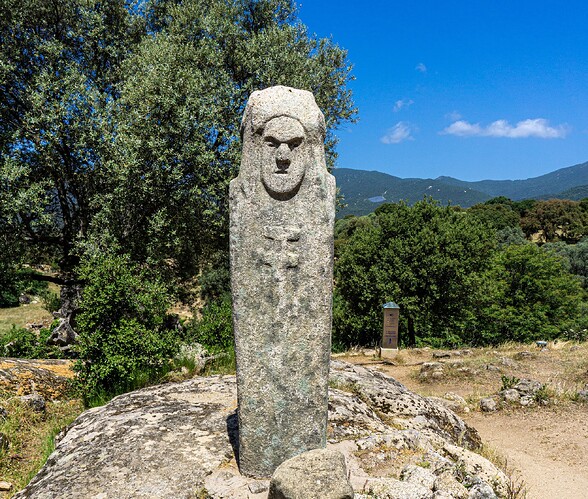
The picture above helps show how much Corsicans care about their history, as this ancient statue is well preserved and is a modern day tourist attraction.